
Power strips are common in homes throughout Pennsylvania. They make it easier to connect computers, chargers, televisions, lamps, and other electronics when there are not enough convenient wall outlets. But adding more places to plug in devices does not mean a power strip can safely handle an unlimited amount of electricity.
Understanding how power strips work, what they can and cannot do, and when to choose a different electrical solution can help homeowners reduce unnecessary risks.
A Power Strip Does Not Create More Electrical Capacity
The most important thing to understand about power strips is that they provide additional receptacles, not additional electrical capacity. Every device plugged into the strip draws power from the same wall outlet and the circuit supplying it.
That distinction matters when several devices are operating at once. A power strip connected to a wall outlet does not give the circuit a higher capacity. The other outlets, lights, and equipment on that same circuit may also contribute to its overall electrical load.
Before connecting multiple devices, consider their power requirements and the rating of the power strip. Follow the manufacturer's instructions and never exceed the product's stated limits.
Understand the Difference Between Power Strips and Surge Protectors
The terms power strip and surge protector are often used interchangeably, but they do not necessarily describe the same product.
A basic power strip provides multiple receptacles from one wall outlet. A surge protector includes components designed to help protect connected equipment from certain voltage surges.
Not every power strip provides surge protection. If you want protection for computers, televisions, or other sensitive electronics, check the product packaging and specifications rather than assuming that multiple outlets mean surge protection.
Surge protectors also have limitations. They do not prevent every possible electrical problem, and they do not increase the capacity of the circuit. Follow the manufacturer's guidance about indicator lights, replacement, and product lifespan.
Avoid Daisy-Chaining Power Strips
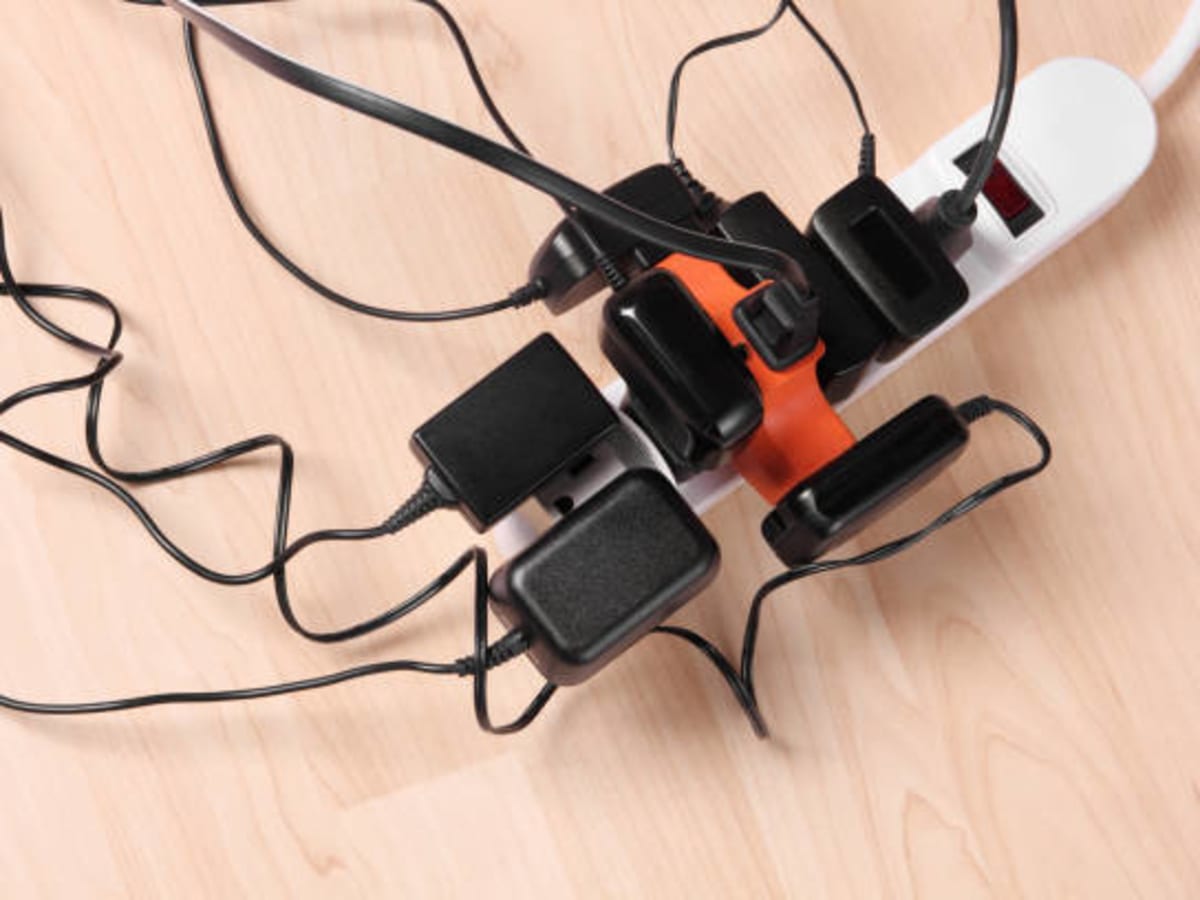
Plugging one power strip into another may seem like an easy way to gain additional outlets, but it creates an unsafe arrangement. The same is true of connecting multiple extension cords or multi-outlet adapters together.
Use a power strip only as directed by its manufacturer and plug it directly into a properly installed wall receptacle unless its instructions specifically state otherwise.
If you regularly need several power strips to accommodate the devices in one room, consider whether the space needs additional receptacles. A qualified electrician can evaluate the existing circuit and discuss appropriate options.
Keep High-Power Appliances Off Power Strips
Power strips are generally intended for smaller electronic devices and equipment within the strip's rating. They should not be treated as a substitute for the electrical connections required by major appliances or high-power equipment.
Heating appliances deserve particular caution. Space heaters, for example, draw substantial power and should be connected directly to a suitable wall receptacle according to the manufacturer's instructions, not through a power strip or extension cord.
The same principle applies to other appliances that have specific electrical requirements. Check the appliance manual and use the electrical connection it specifies.
If an appliance requires a dedicated circuit or a particular receptacle, a power strip is not an alternative.
Choose and Position Power Strips Carefully
When purchasing a power strip or surge protector, choose a product from a reputable manufacturer and look for certification by a recognized testing organization. Check that the product is appropriate for the intended location and use.
Avoid damaged, modified, or poorly labeled products. Do not use a strip with cracked housing, loose receptacles, damaged wiring, or signs of overheating. If a plug fits loosely or the strip feels unusually warm, stop using it.
Placement matters, too. Keep power strips in dry, accessible locations where they are unlikely to be crushed by furniture or exposed to spills. Avoid placing them beneath rugs or carpeting, where heat can build up and damage may go unnoticed.
Do not mount or use a power strip in a way that conflicts with its instructions. Some products are designed for desktop use, while others have specific mounting provisions.
Recognize Signs of an Electrical Problem
A power strip should not be used to work around recurring problems with your home's electrical system. Pay attention to warning signs such as:
Frequently tripping circuit breakers
Flickering or dimming lights
Warm or discolored outlets
Burning odors near outlets or electrical equipment
Buzzing, sizzling, or crackling sounds
Plugs that do not fit securely
These symptoms can indicate an overloaded circuit, a damaged receptacle, or another electrical issue. Unplug equipment if it is safe to do so and stop using the affected outlet or power strip until the problem has been evaluated.
Never remove an electrical panel cover or attempt to repair wiring yourself. If you notice smoke, sparks, or an active electrical fire, move away and contact emergency services.
When Is It Time to Add More Outlets?
If your family relies on power strips throughout the house, it may be time to consider whether your electrical layout still meets your needs.
A home office with multiple monitors and computer accessories, a living room with entertainment equipment, or a bedroom with several charging devices may benefit from additional properly located receptacles. The right solution depends on the existing wiring, circuit capacity, and the devices you plan to use.
An electrician can assess the space, determine whether existing circuits can accommodate the intended load, and explain what work may be appropriate. Adding outlets is not simply a matter of finding an empty place on the wall; the wiring and circuit must also be suitable.
Make Power Strip Safety Part of Your Home Routine
Power strips can be useful when they are selected and used appropriately. Choose products with clear ratings, avoid connecting strips together, keep high-power appliances on suitable wall outlets, and pay attention to signs of overheating or electrical trouble.
If you find yourself relying on power strips because your Pennsylvania home does not have enough conveniently located outlets, an electrical evaluation can help you identify a safer long-term arrangement. Thomas Edison Electric can help you explore electrical improvements that make your home more practical for everyday use.
Talk to an electrician
800.380.6800Available 24/7, including weekends.
Schedule Now- Same-day appointments
- Upfront, honest pricing
- Licensed and insured
Found this helpful?