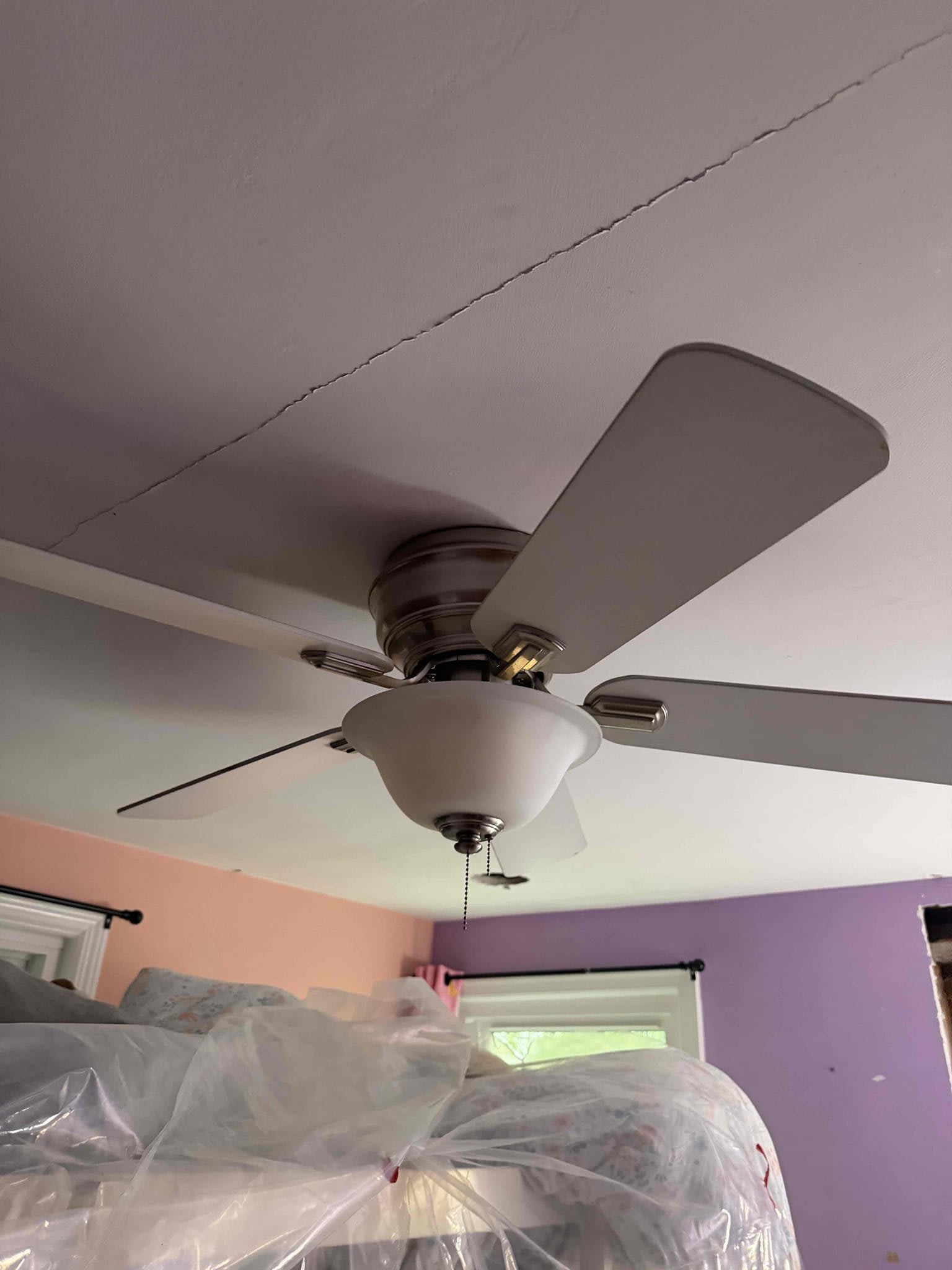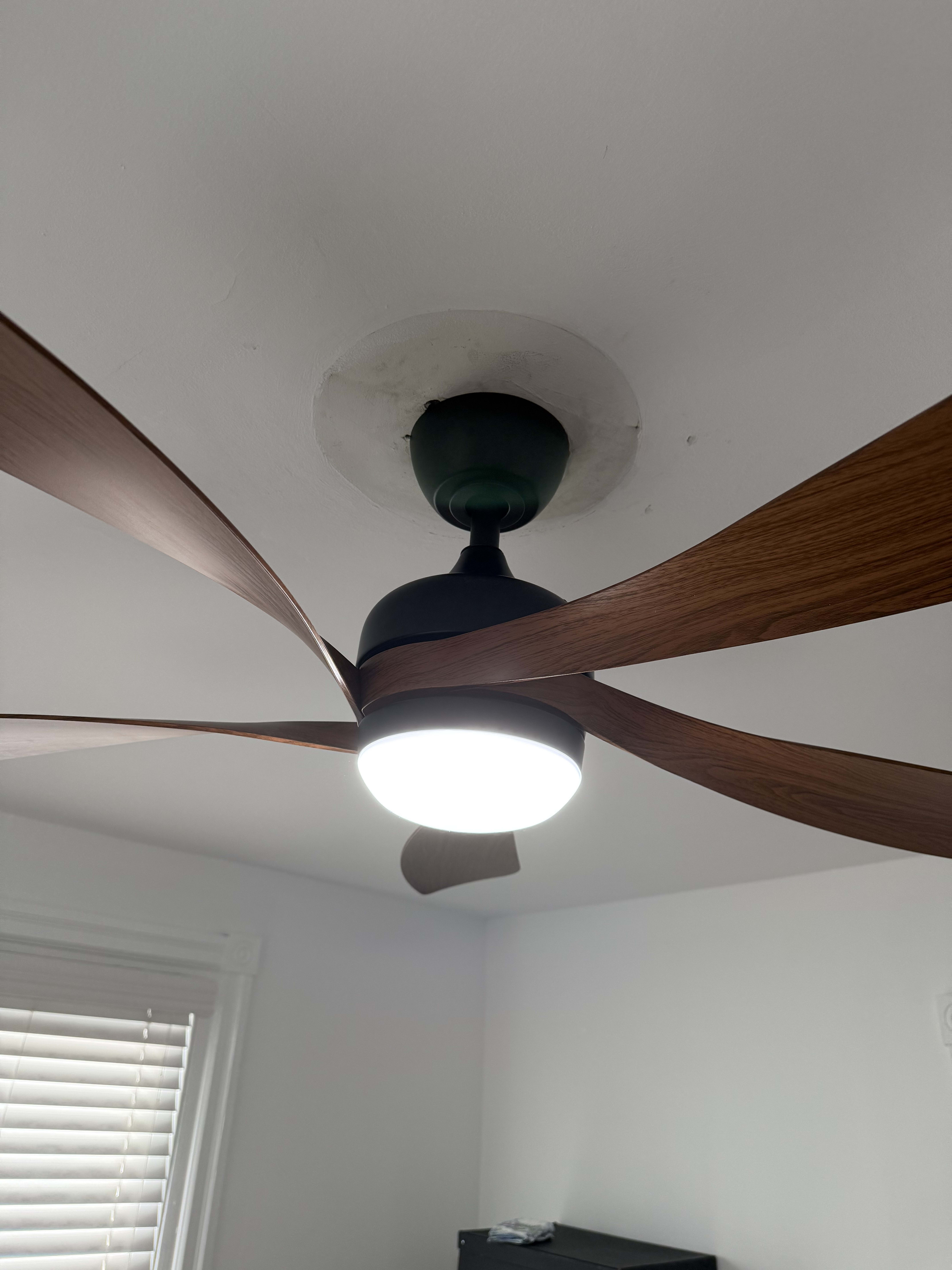

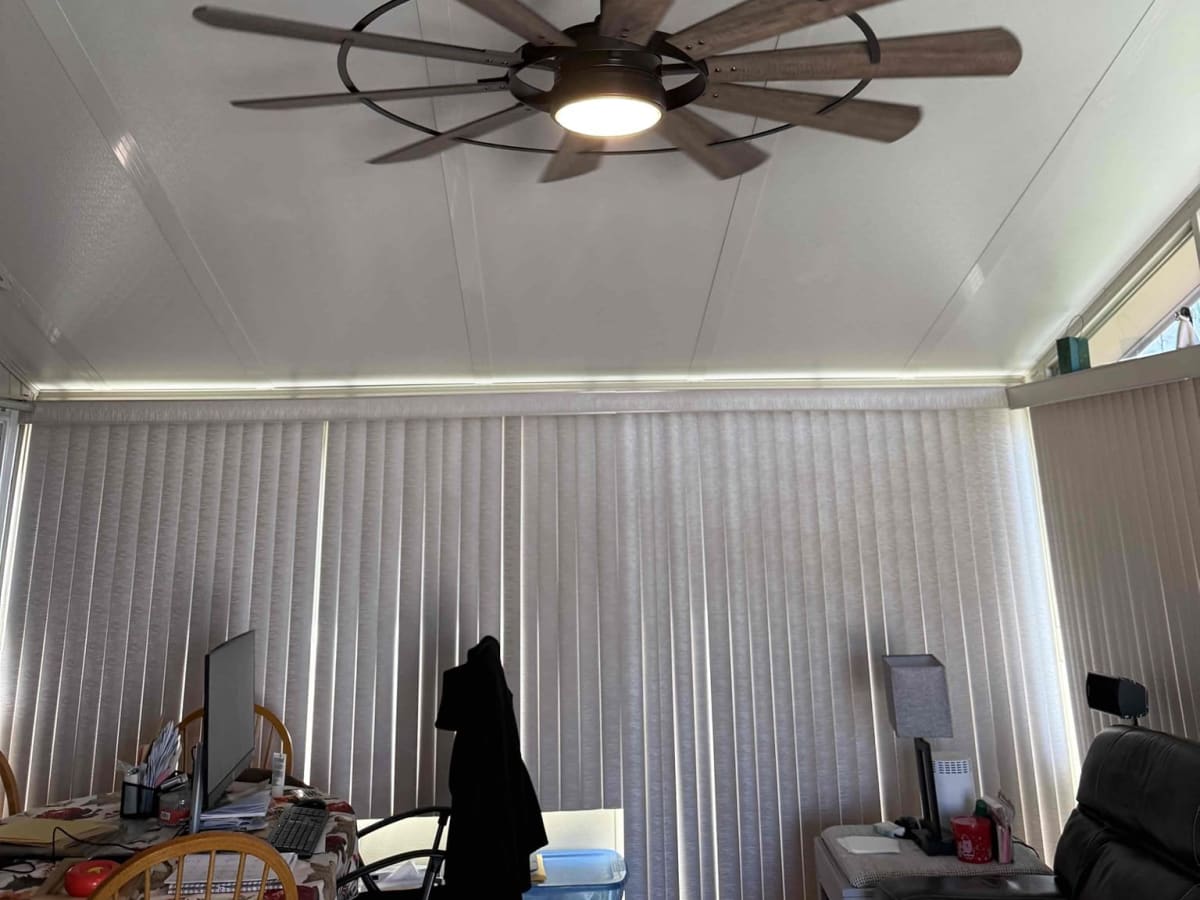
Ceiling fans are a practical addition to many homes. They can improve comfort, help circulate air, and complement a room's existing lighting. Whether you're replacing an outdated ceiling fixture or adding a fan to a bedroom, living room, or covered outdoor space, there are several things to consider before installation.
A ceiling fan may look like a relatively simple fixture, but installing one involves more than attaching blades and connecting a few wires. The fan needs appropriate structural support, compatible electrical connections, and enough clearance to operate safely.
For homeowners throughout South and Central New Jersey, understanding these considerations can help make a ceiling fan installation a more straightforward project.
Can You Replace a Regular Ceiling Light With a Ceiling Fan?
One of the most common questions homeowners ask is whether an existing ceiling light can simply be replaced with a ceiling fan.
The answer depends on the electrical box and the structure supporting it.
A standard ceiling light fixture and a ceiling fan place different demands on their mounting hardware. A fan has a motor and rotating blades, which create movement and vibration during operation. Its mounting system must be designed to support the weight of the fan and the forces created while it runs.
ENERGY STAR recommends using an appropriately rated electrical box specifically marked for ceiling fan use. Its installation guidance also explains that the fan should be anchored appropriately to the ceiling structure.
An existing light fixture box should never be assumed to provide adequate support for a ceiling fan. An electrician can inspect the existing installation and determine whether the electrical box and mounting arrangement are suitable or need to be changed.
Why Ceiling Fan Support Matters
A ceiling fan can weigh considerably more than a typical ceiling light.
Even a fan that appears lightweight can create movement and vibration as its blades rotate. If the mounting box is not properly secured, the fan may wobble excessively or become loose over time.
This is particularly important in older New Jersey homes, where ceiling fixtures may have been installed decades ago.
Some homes in Cherry Hill, Haddonfield, Moorestown, and other established communities have undergone multiple renovations. Previous owners may have replaced light fixtures without making changes to the original electrical boxes.
A professional installation should account for the actual mounting conditions rather than simply reusing whatever hardware is already present.
Choosing the Right Ceiling Fan for Your Room
Ceiling fans come in many sizes, styles, and configurations. Choosing the right one involves considering the room's dimensions, ceiling height, intended use, and appearance.
A fan that is too small may not provide the desired airflow, while an oversized model may overwhelm a smaller room. Consider the following factors when selecting a fan.
Room Size
The size of the room is one of the first things to evaluate.
A larger living room, family room, or open-concept space may benefit from a larger fan or a carefully planned fan arrangement. A smaller bedroom may be better suited to a more compact model.
Manufacturers often provide sizing recommendations based on room dimensions. These recommendations can help narrow down the available options.
Ceiling Height
Ceiling height affects both fan selection and installation.
Homes with standard ceiling heights may accommodate conventional mounting arrangements, while rooms with higher ceilings may require an appropriate downrod.
For rooms with lower ceilings, a low-profile or hugger-style fan may be a better option.
The fan must also maintain appropriate clearance from the floor and surrounding objects. ENERGY STAR and its building guidance emphasize following manufacturer instructions and maintaining appropriate clearances when selecting and installing ceiling fans.
Fan Style and Lighting
Ceiling fans are available with and without integrated lighting.
A fan with a light kit can combine two functions in one fixture, making it useful in bedrooms and other spaces where overhead lighting is desirable.
Other homeowners prefer a fan without a light because the room already has recessed lighting, wall sconces, or other fixtures.
Consider the room's existing lighting before selecting a model.
You should also consider whether the fan's lighting controls are compatible with the electrical switches already installed.
What About Ceiling Fans With Remote Controls?
Many modern ceiling fans include remote controls that allow homeowners to adjust speed, lighting, and other settings. Some models also offer wall-mounted controls, smart-home connectivity, or app-based operation.
These features can be convenient, particularly in bedrooms where reaching a traditional pull chain may be difficult. However, the control system should be considered as part of the installation plan.
Some fans use specialized receivers or controls that are designed to work with the manufacturer's equipment. Installing an incompatible wall control can interfere with normal operation.
If you want to operate the fan from an existing wall switch, discuss the intended arrangement before installation.
Understanding Ceiling Fan Wiring
Ceiling fan wiring can vary depending on the fan model and the existing electrical installation.
Some fans have separate connections for the motor and light, while others use a configuration that allows both functions to be controlled through a single connection or specialized remote receiver. The wiring already present in the ceiling may also affect which control options are available.
For example, an older installation may have been designed for a single ceiling light rather than a fan with separately controlled lighting and motor functions.
An electrician can evaluate the existing wiring and explain what options are practical without making assumptions about what is behind the ceiling.
This is especially useful when replacing a fixture in an older home or when adding a fan to a room that has never had one.
Why Does My Ceiling Fan Wobble?
A small amount of movement may occur during operation, but excessive wobbling deserves attention.
There are several possible reasons a ceiling fan may wobble.
The blades may not be balanced.
Blade brackets may not be aligned.
Mounting hardware may be loose.
The fan may not be installed on an appropriate support system.
A component may be damaged.
Some manufacturers include balancing kits with their fans. These kits can help correct certain blade-balance issues.
ENERGY STAR recommends checking blade alignment and using an appropriate balancing kit when necessary.
However, if the fan moves significantly at the ceiling or appears to be pulling away from its mounting point, stop using it and have the installation inspected.
Do not attempt to correct a structural mounting problem by simply adding blade weights.
Can Ceiling Fans Help With Energy Efficiency?
Ceiling fans do not lower the actual temperature of a room. Instead, they create airflow that helps people feel cooler. During warmer weather, the moving air produces a wind-chill effect that can improve comfort.
This may allow homeowners to adjust their thermostat while maintaining a comfortable environment.
In cooler months, many ceiling fans can operate in reverse at a low speed. This creates an upward airflow pattern that helps circulate warmer air that collects near the ceiling.
ENERGY STAR recommends using a counterclockwise direction during summer and reversing the fan to a low-speed clockwise direction during winter, subject to the manufacturer's instructions. It also recommends turning fans off when rooms are unoccupied.
These adjustments can make a ceiling fan useful throughout the year rather than only during summer.
Common Ceiling Fan Installation Mistakes
Several installation mistakes can affect the performance and safety of a ceiling fan.
Using an Inappropriate Electrical Box
A standard lighting box may not provide the support needed for a fan.
Ignoring Ceiling Height
A fan that hangs too low or has inadequate clearance can create an unnecessary safety concern.
Choosing Incompatible Controls
Not every fan works with every dimmer, wall switch, or remote-control system.
Overlooking Existing Wiring
The wiring available in an older ceiling may not support every feature of a new fan without additional work.
Ignoring Excessive Movement
A fan that wobbles significantly or makes unusual noises should be evaluated rather than left operating indefinitely. Professional installation helps address these considerations before the fan is put into regular use.
Professional Ceiling Fan Installation in South and Central New Jersey
A ceiling fan can be a useful upgrade for bedrooms, living rooms, home offices, and other areas of your home. Choosing the right model is important, but so is making sure the electrical and structural installation is appropriate.
Thomas Edison Electric is a family-owned electrical company based in Cherry Hill, serving residential clients throughout South and Central New Jersey, including Burlington, Camden, and Mercer counties.
If you're considering a new ceiling fan, replacing an existing fixture, or addressing a fan that wobbles or operates inconsistently, contact Thomas Edison Electric to discuss your electrical project.
Talk to an electrician
800.380.6800Available 24/7, including weekends.
Schedule Now- Same-day appointments
- Upfront, honest pricing
- Licensed and insured
Found this helpful?