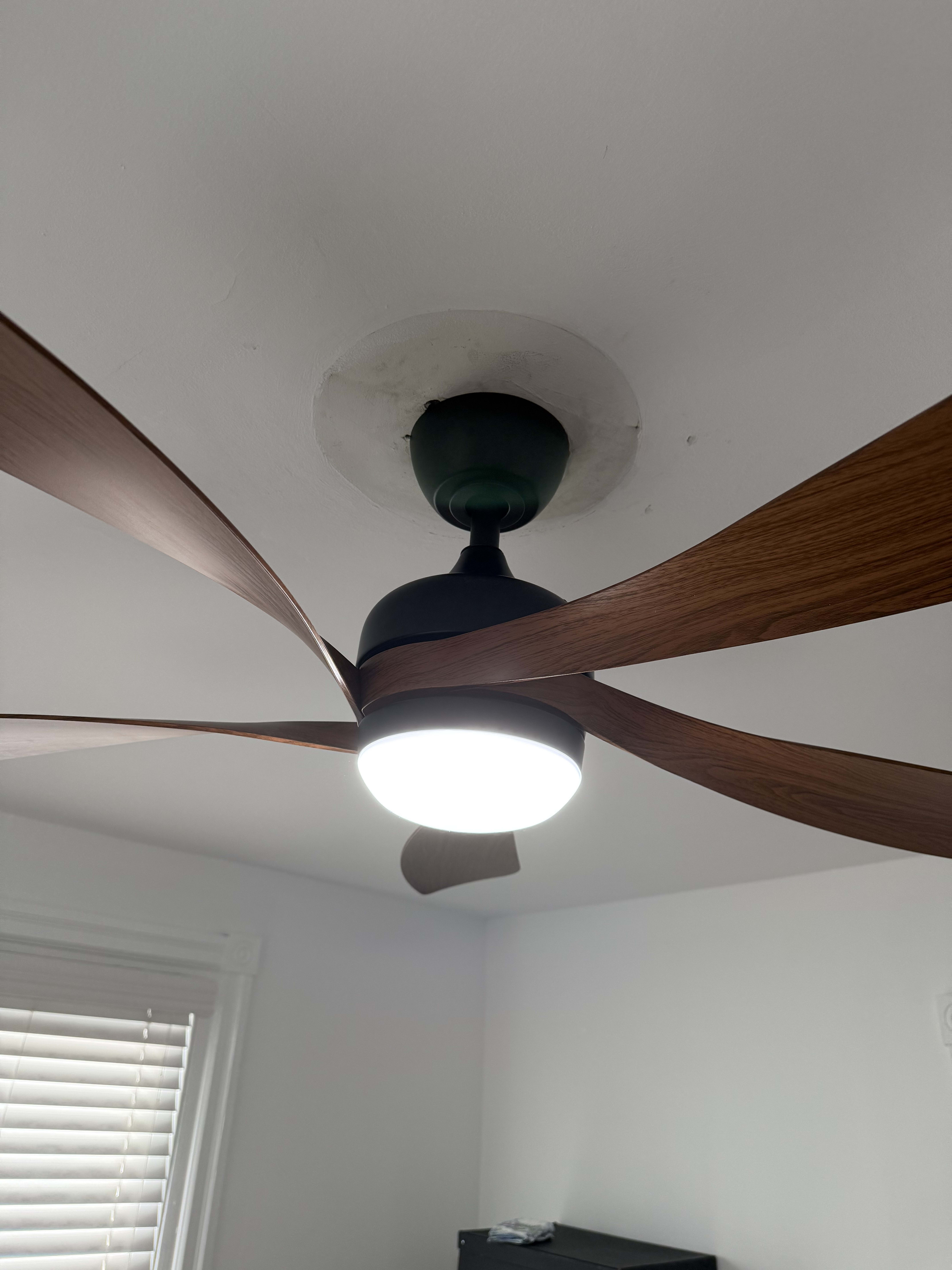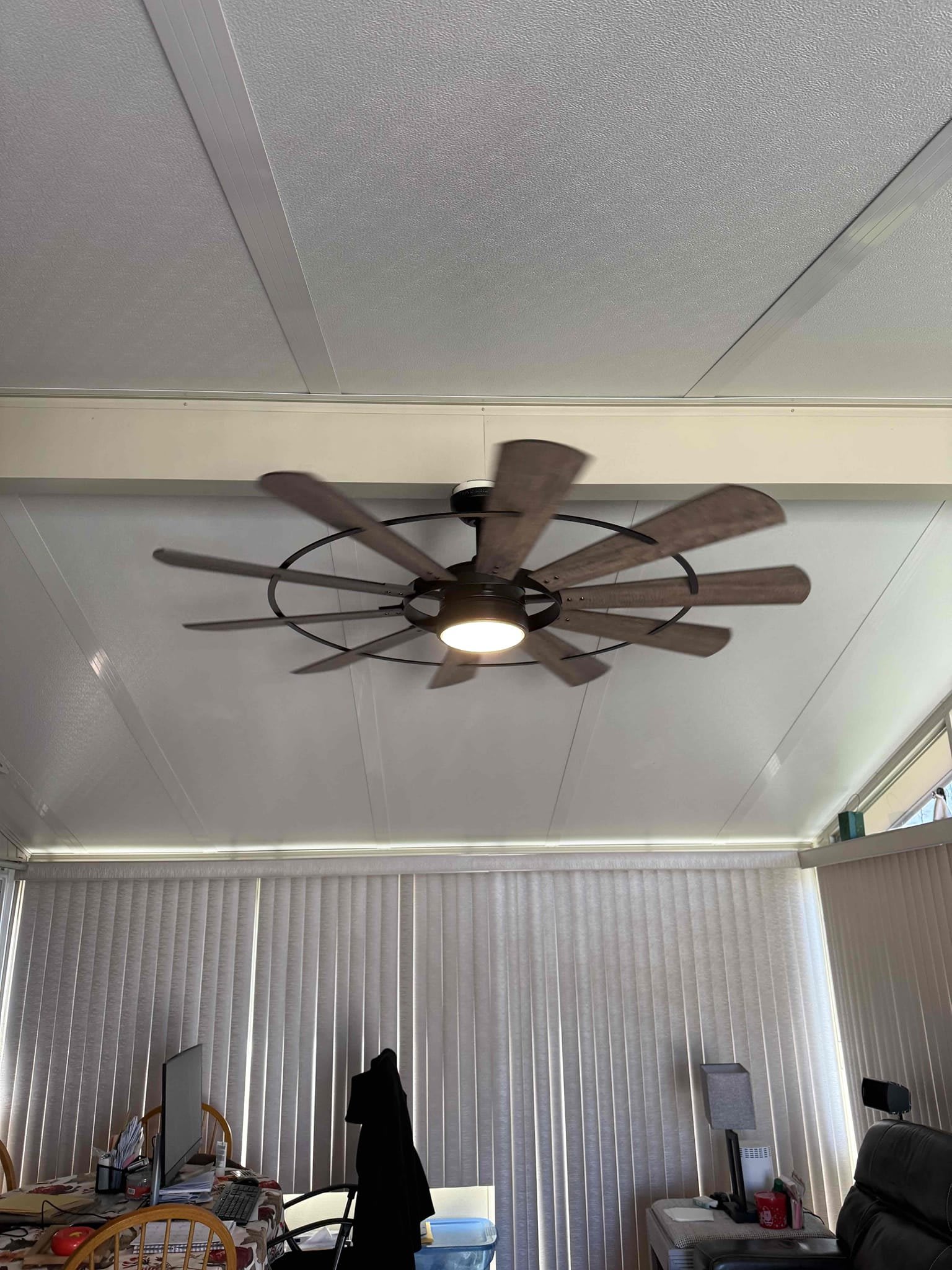

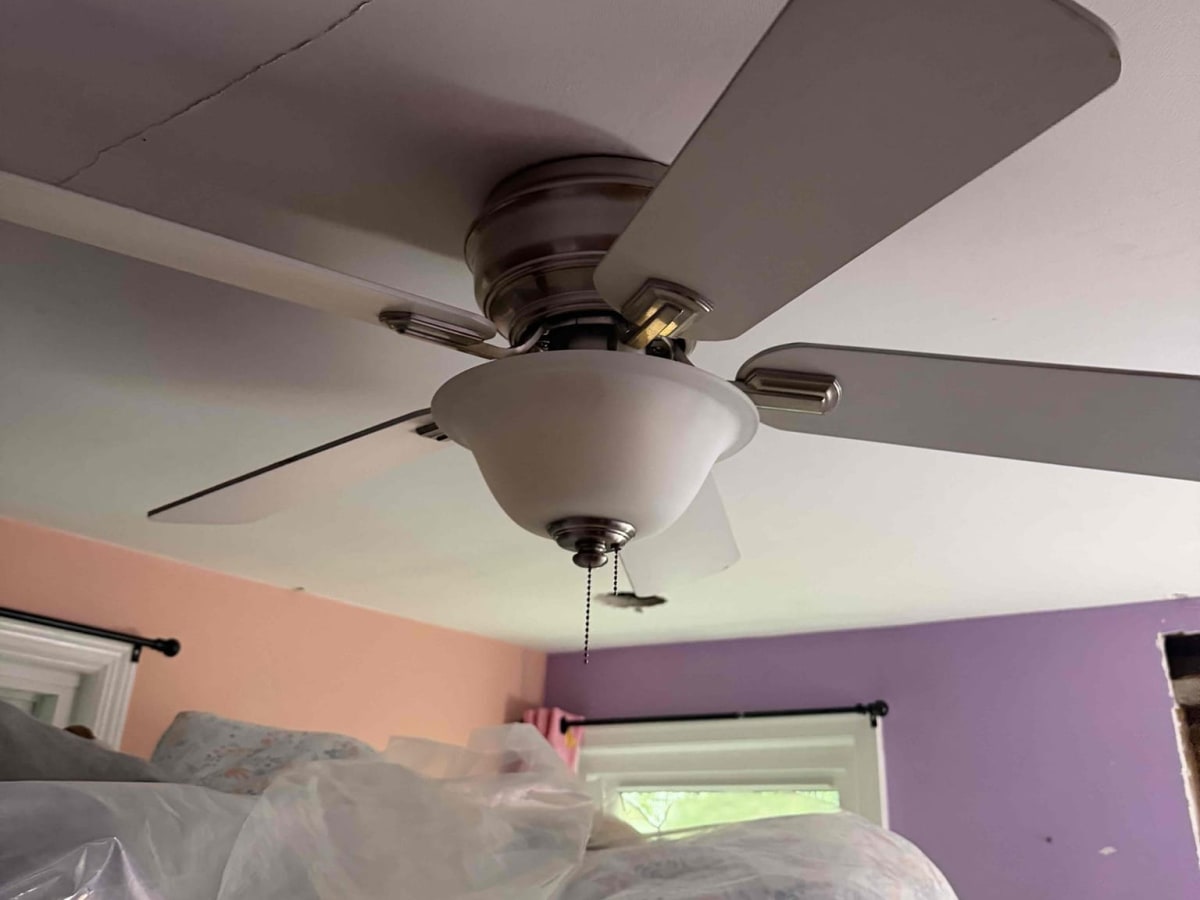
A ceiling fan can make a room more comfortable while adding a practical design feature. It helps circulate air, supports comfort during warmer months, and can complement an existing lighting arrangement.
However, installing a ceiling fan involves more than attaching a fixture to the ceiling. The electrical box, mounting support, wiring, switches, and fan specifications all need to be compatible with the installation.
Whether you are replacing an existing fan or adding one to a room for the first time, understanding the electrical considerations can help you plan the project.
Why Ceiling Fan Installation Requires Proper Electrical Support
Ceiling fans are heavier and operate differently from many standard light fixtures.
Their movement creates vibration and mechanical forces that the mounting system must be designed to support.
A standard electrical box intended only for a light fixture may not be suitable for a ceiling fan.
Use a Fan-Rated Electrical Box
A ceiling fan needs an electrical box and mounting system specifically rated to support the fan's weight and movement.
The box must be securely attached to an appropriate structural support.
Simply attaching a fan to an existing light fixture box without verifying its rating can create a safety hazard.
Check the Ceiling Structure
The ceiling framing and mounting arrangement affect how the fan can be installed.
Some locations may need additional support or a different mounting approach.
An electrician can evaluate the existing installation and determine what modifications are necessary.
Consider Ceiling Height and Fan Clearance
The fan should be positioned with appropriate clearance from the floor, ceiling, walls, and nearby objects.
The manufacturer's instructions provide important requirements for mounting height and blade clearance.
Sloped ceilings may also require a compatible mounting system.
Replacing an Existing Ceiling Fan
Replacing an existing fan may be more straightforward than installing one in a location that has never had a ceiling fan.
However, the existing electrical box and wiring should still be evaluated.
Check the Existing Mounting Support
Do not assume the old mounting system is suitable for a replacement fan.
The new fan may have a different weight, mounting design, or installation requirements.
The electrical box should be rated for the fan and securely supported.
Review the New Fan's Specifications
Ceiling fans vary in size, motor design, lighting features, and control systems.
Before selecting a replacement, review the manufacturer's installation instructions and electrical requirements.
A fan with integrated lighting or specialized controls may require a different wiring arrangement than a basic model.
Consider Whether the Existing Switches Are Compatible
Some older fans use simple wall switches, while newer models may include remote controls, integrated receivers, or smart-home features.
The existing wiring and controls should be compatible with the selected fan.
Understanding Ceiling Fan Wiring
Ceiling fan wiring depends on the model and the controls being used.
Some fans have separate connections for the motor and light, while others use a single power connection with remote or integrated controls.
Fans With Separate Light and Fan Controls
Some ceiling fans are designed to allow independent operation of the fan motor and light.
This may require separate switched conductors from the wall controls, depending on the fan design.
If the existing wiring does not support the desired arrangement, modifications may be necessary.
Fans With Remote Controls
Many modern fans include remote controls or receivers that manage fan speed and lighting.
The receiver is typically installed as part of the fan's wiring arrangement.
The manufacturer's instructions should be followed to ensure that the electrical connections are appropriate.
Smart Ceiling Fans
Some ceiling fans can connect to home automation systems or be controlled through an app or voice assistant.
Compatibility varies by manufacturer and model.
Before purchasing a smart fan, check whether it requires a particular wall switch, control module, wireless connection, or wiring configuration.
Do You Need a Separate Switch for the Fan and Light?
Not necessarily. The appropriate arrangement depends on the fan and how you want to operate it.
Independent Wall Controls
Separate wall controls can make it convenient to operate the fan and light independently.
This can be useful when you want the light on without running the fan or want to circulate air without using the light.
Single-Switch Operation
Some fans are designed to operate through a single wall switch, with fan speed and lighting controlled through a remote or another integrated system.
This can work well when the fan's controls are compatible with the existing electrical setup.
Remote-Controlled Fans
Remote controls can reduce the need for separate wall switches, but homeowners should consider what happens if the remote is misplaced or its batteries fail.
Some models also offer wall-mounted remote holders or compatible replacement controls.
Ceiling Fan Lighting Options
A ceiling fan can provide both air circulation and general room lighting.
If you are selecting a fan with an integrated light, consider how much illumination the fixture will provide.
Integrated LED Lighting
Many modern fans include built-in LED lighting.
These fixtures can provide energy-efficient illumination, but replacement options and repair requirements vary by model.
Review the manufacturer's information before purchasing.
Replaceable Light Bulbs
Other fans use standard or specialized replaceable bulbs.
Check the fixture's maximum wattage and bulb compatibility before selecting replacements.
Dimmers and Fan Speed Controls
Not every dimmer or wall control is compatible with every ceiling fan.
Using an incompatible control can cause flickering, humming, or improper operation.
The fan manufacturer may specify which controls are approved for the model.
Choosing the Right Ceiling Fan for the Room
Selecting an appropriate fan involves more than choosing a style you like.
The room's size, ceiling height, and intended use all affect which fan may be suitable.
Fan Size and Room Dimensions
Ceiling fans are available in a range of blade spans.
A fan that is too small may not circulate air effectively throughout a larger room, while an oversized fan may be inappropriate for a smaller space.
Manufacturers often provide sizing recommendations based on room dimensions.
Ceiling Height
Rooms with high ceilings may require an appropriate downrod to position the fan at a suitable height.
Rooms with lower ceilings may need a low-profile fan designed for limited clearance.
Indoor and Outdoor Ratings
Not every ceiling fan is designed for exterior use.
Covered porches and other outdoor locations may require fans rated for damp or wet conditions, depending on the level of exposure.
Always check the manufacturer's location and installation ratings.
Common Ceiling Fan Installation Problems
A fan that is improperly installed or incompatible with its electrical setup may develop operational problems.
Fan Wobbling
Some minor movement may occur during operation, but excessive wobbling can indicate an installation or balancing issue.
Possible causes include loose mounting hardware, improperly balanced blades, or unsuitable support.
Turn off a fan that appears unstable and have it evaluated.
Humming or Buzzing
Unusual humming or buzzing may be related to the motor, controls, electrical connections, or fan components.
If the noise is new or persistent, check the manufacturer's troubleshooting instructions and consider professional evaluation.
Lights Flickering
Flickering lights may result from an incompatible dimmer, loose connection, defective light module, or another issue.
Do not assume the problem is simply a bad bulb if it continues after replacement.
Fan Does Not Respond to Controls
A fan that stops responding may have a remote-control issue, receiver problem, wiring issue, or power interruption.
An electrician can help determine whether the problem is electrical or related to the fan's control system.
Can You Install a Ceiling Fan Where There Is Only a Light Fixture?
In many cases, yes, but the existing electrical box and support must be evaluated.
A standard light fixture box may not be designed to support a fan.
The installation may require replacing the box, adding structural support, or modifying the wiring.
The amount of work depends on the ceiling construction and the fan's requirements.
When to Hire an Electrician for Ceiling Fan Installation
Professional installation is especially important when the project involves:
Installing a fan where no fixture previously existed
Replacing an electrical box
Adding structural support
Modifying wiring or switches
Installing a fan with integrated lighting or specialized controls
Installing a fan on a sloped ceiling
Addressing flickering, buzzing, or other electrical problems
A qualified electrician can evaluate the electrical connections and mounting support to make sure the installation is appropriate.
Enjoy Better Comfort With Professional Ceiling Fan Installation
A ceiling fan can be a useful addition to a bedroom, living room, home office, or covered outdoor space. However, proper mounting, wiring, and control compatibility are essential for safe operation.
Thomas Edison Electric provides electrical services for homeowners throughout South and Central New Jersey, including Burlington, Camden, and Mercer Counties.
If you are replacing a ceiling fan or adding one to a new location, contact Thomas Edison Electric to discuss your installation.
Talk to an electrician
800.380.6800Available 24/7, including weekends.
Schedule Now- Same-day appointments
- Upfront, honest pricing
- Licensed and insured
What our clients paid
$400 to $675
Ceiling fan installed
From 86 of our jobs in the last 18 months. The middle half of real invoices in PA and NJ, before discounts, updated monthly. You get a written price before any work starts.
Found this helpful?