
Outdoor electrical outlets make it easier to enjoy and maintain your home's exterior. They provide convenient power for landscape equipment, holiday decorations, outdoor entertaining, and everyday projects around the yard. But outdoor receptacles face conditions that indoor outlets do not, including rain, humidity, temperature changes, dirt, and exposure to the elements.
In New Jersey, outdoor electrical equipment may experience everything from summer thunderstorms and humid weather to freezing temperatures and winter precipitation. An outlet that is not properly installed or protected can become a safety concern, particularly when electricity and moisture are involved.
Whether you are adding an exterior receptacle or checking an existing one, it is important to consider its location, protective features, and overall condition. Understanding these details can help you make informed decisions about outdoor electrical work and when to call a licensed electrician.
Why Outdoor Electrical Outlets Need Special Attention
An outdoor outlet is exposed to a different environment than a receptacle inside a dry room. Even an outlet installed beneath a porch or roof may be affected by wind-driven rain, water runoff, humidity, and seasonal temperature changes.
Outdoor receptacles and their enclosures need to be suitable for the conditions where they are installed. The appropriate equipment and installation details depend on whether the location is considered damp or wet and how the receptacle will be used.
Moisture Can Create Electrical Hazards
Water and electricity are a dangerous combination. Moisture entering an electrical enclosure can contribute to corrosion, damage, and unsafe operating conditions. Outdoor outlets should never be treated as ordinary indoor receptacles with a decorative cover added afterward.
The enclosure, cover, receptacle, wiring, and protective devices all have a role in creating an installation appropriate for the location. A weatherproof appearance alone does not establish that an outlet is properly protected.
If an outdoor outlet has been exposed to significant water or appears to have moisture inside its enclosure, avoid using it until it has been evaluated. Do not remove the cover or attempt to dry internal electrical components yourself.
Outdoor Conditions Change Throughout the Year
New Jersey homeowners should also consider how an outlet will hold up over time. Rain, snow, ice, direct sunlight, and temperature fluctuations can affect outdoor electrical components.
A cover that has cracked or become difficult to close may no longer provide the protection it was designed to offer. Gaskets can deteriorate, hardware can loosen, and exposed components may show signs of corrosion.
It is worth including exterior outlets in routine home maintenance rather than waiting until an electrical problem becomes obvious. A visual check can help identify damage that warrants professional attention.
What Makes an Outdoor Outlet Weatherproof?
Weatherproofing involves more than placing a cover over a receptacle. The equipment must be appropriate for the environment, and the installation must maintain the protection intended by the product's design.
Choose an Appropriate Enclosure and Cover
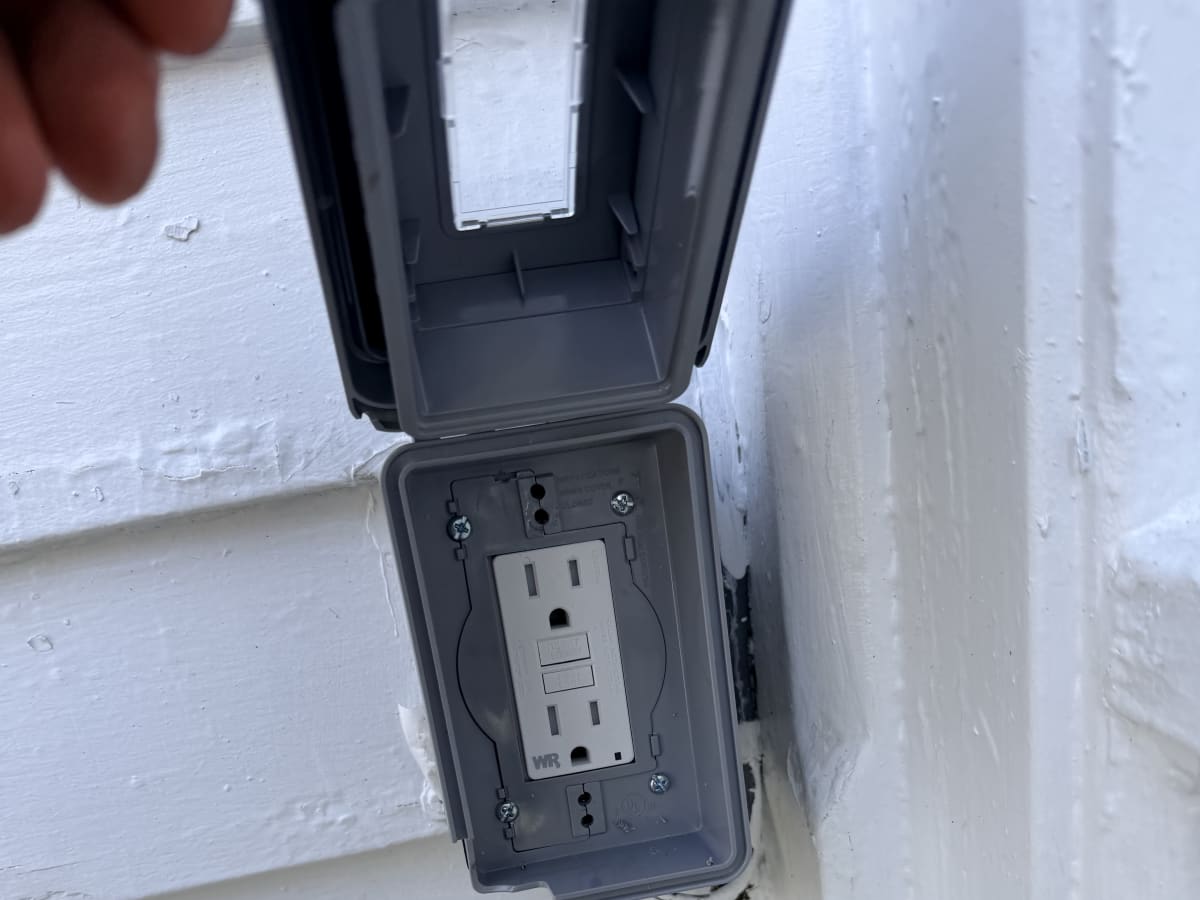
Outdoor receptacles are installed in enclosures designed for the conditions where they will be used. The cover must also be suitable for the location and intended use of the outlet.
Some installations are in areas protected from direct weather, such as certain covered porches. Others are exposed to rain and other precipitation. The distinction matters because the equipment must be selected for the actual conditions rather than simply the fact that the outlet is outside.
For locations exposed to weather, the cover must provide the required protection when the receptacle is not in use and, where applicable, while a cord is plugged in. The specific equipment and installation requirements should be determined by a qualified electrician.
Understand the Difference Between Damp and Wet Locations
Not every outdoor location is exposed to moisture in the same way. A covered area may be considered different from a wall that receives direct rainfall or water runoff.
That distinction can affect the type of enclosure and cover required. An outlet beneath a roof, for example, should not automatically be assumed to have the same protection needs as one installed on an uncovered exterior wall.
The electrician should evaluate the actual placement, including nearby roof edges, gutters, sprinklers, and other sources of water. Even a location that seems sheltered may receive more moisture than expected during certain weather conditions.
Look for Signs of Wear
During a visual check, homeowners can look for obvious damage without opening the electrical enclosure or attempting repairs. Warning signs include cracked covers, missing screws, visible rust, loose exterior components, or a cover that no longer closes properly.
If an outlet appears damaged, avoid using it until it has been evaluated. Do not attempt to seal an electrical enclosure with household caulk or improvised materials, since doing so may interfere with the product's intended design or conceal a problem.
The Role of GFCI Protection Outdoors
Ground-fault circuit interrupter protection, commonly called GFCI protection, is an important part of electrical safety in areas where moisture may be present. GFCIs are designed to interrupt power when they detect a ground fault, helping reduce the risk of serious electric shock.
Outdoor receptacles are among the locations where GFCI protection is particularly important. Because outdoor equipment is exposed to moisture and people may use electrical tools or appliances outside, this protective feature is an essential consideration when evaluating exterior outlets.
How GFCI Protection Works
A GFCI monitors the flow of electricity and can shut off power when it detects an imbalance that may indicate current is traveling along an unintended path. This quick interruption can help protect people from potentially dangerous shocks.
GFCI protection may be provided through a GFCI receptacle or through another appropriate protective arrangement. The correct configuration depends on the existing circuit and the requirements that apply to the installation.
Test GFCI Devices as Directed
GFCI devices include test and reset controls. Homeowners should follow the manufacturer's instructions for testing the device and should not ignore a receptacle that will not reset or does not operate as expected.
If the device trips repeatedly, will not reset, or appears damaged, have it evaluated by an electrician. Repeatedly resetting a protective device without identifying the cause is not a substitute for addressing the underlying issue.
GFCI Protection Does Not Replace Weatherproofing
It is important to understand that GFCI protection and weatherproofing serve different purposes. A GFCI helps reduce the risk of electric shock under certain fault conditions, while an appropriate enclosure and cover protect the receptacle from environmental exposure.
One does not replace the other. An outdoor outlet needs the protective features appropriate to its location and use. A receptacle can have GFCI protection and still need attention if its enclosure or cover is damaged.
Where Outdoor Outlets Can Be Useful
Homeowners often add outdoor receptacles when they realize how frequently they need power outside. Planning the location carefully can make everyday tasks easier while reducing the temptation to rely on long extension cords.
Patios, Decks, and Outdoor Living Areas
An outlet near a patio or deck can be useful for seasonal lighting, outdoor entertaining equipment, and other temporary electrical needs. The placement should account for furniture arrangements, walking paths, and exposure to rain or water.
If the outlet is near a grill, outdoor kitchen, or other fixed feature, discuss the layout with your electrician before construction is complete. The finished design may affect access, enclosure placement, and the best route for wiring.
It is also helpful to consider how the area will be used throughout the year. A receptacle that is convenient for summer entertaining may also be useful for seasonal decorations or other outdoor activities.
Gardens and Landscaping
Outdoor receptacles can support certain lawn and garden tools, landscape projects, and seasonal decorations. Their locations should be selected with the surrounding environment in mind.
For example, an outlet placed close to an irrigation system or frequently watered garden bed may experience more moisture exposure than one installed beneath a protected structure. The electrician can help determine whether the proposed location and equipment are appropriate.
Think about where equipment will actually be used, too. A thoughtfully located outlet may reduce the need to run long extension cords across walkways, driveways, or landscaped areas.
Garages, Sheds, and Exterior Work Areas
Exterior outlets can also be useful near garages, driveways, and work areas where homeowners use tools or equipment. If you are planning a new receptacle, consider what will be plugged into it and how frequently it will be used.
A location that works for occasional holiday lights may not be ideal for a regularly used work area. Thinking about the intended use helps the electrician plan an installation that fits the space.
If you are adding an outlet to a detached shed or another separate structure, the electrical requirements may differ from those for a receptacle on the home's exterior. Have the electrician evaluate the complete project rather than assuming the same approach will work in every location.
Common Outdoor Outlet Problems to Watch For
Outdoor electrical components can deteriorate over time, particularly when they are exposed to weather or have not been maintained. Recognizing signs of trouble can help homeowners know when an outlet needs professional attention.
Cracked or Missing Covers
A damaged or missing cover can leave electrical components more exposed to moisture and debris. Even if the outlet still appears to work, the enclosure may no longer provide the intended protection.
Do not assume that replacing the visible cover is always enough. The receptacle, box, wiring connections, and mounting may also need inspection. A professional can determine whether the problem is limited to the cover or whether other components have been affected.
Corrosion or Discoloration
Rust, corrosion, or unusual discoloration around an outdoor receptacle may indicate prolonged exposure to moisture or deterioration. If you see these signs, avoid using the outlet and arrange for an electrician to evaluate it.
Discoloration can also be a sign of overheating or another electrical issue. Homeowners should not attempt to clean the receptacle or remove corrosion themselves, since the underlying cause may require more than a cosmetic repair.
Loose or Damaged Receptacles
An outlet that moves when a plug is inserted or removed should be checked. A loose receptacle can indicate a mounting issue or another problem that needs professional attention.
Never attempt to tighten or replace outdoor electrical components while they are energized. Electrical work should be performed by someone qualified to do it safely.
Tripping or Failure to Reset
If a GFCI device trips or will not reset, there may be a problem with the connected equipment, moisture intrusion, the circuit, or the protective device itself. The cause should be identified rather than ignored.
If an outlet stops working after rain or another weather event, do not assume that it will be safe once it dries. Have the equipment evaluated before putting it back into use.
Adding an Outdoor Outlet to Your Home
If your home does not have an outlet where you need one, a licensed electrician can evaluate the best way to add it. The work may involve determining an appropriate location, assessing the available circuit, selecting equipment suitable for the environment, and routing wiring safely.
The installation also needs to comply with the electrical requirements that apply in New Jersey. Requirements can depend on the location, type of receptacle, protective features, and scope of the work. An electrician familiar with the applicable state and local requirements can help determine what the project involves.
Before work begins, explain how you expect to use the outlet and whether the location is exposed to direct weather, irrigation, or other sources of moisture. Those details help inform the installation plan.
Keep Outdoor Electrical Connections in Good Condition
Outdoor outlets are convenient, but they should never be treated as maintenance-free. Periodically check visible covers and enclosures for damage, follow the manufacturer's GFCI testing instructions, and stop using outlets that show signs of deterioration or malfunction.
It is also worth thinking about outdoor electrical needs before starting a landscaping or exterior renovation project. Adding an outlet while other work is underway may make it easier to coordinate the installation and select a location that fits the finished space.
For homeowners in South and Central New Jersey, Thomas Edison Electric can help evaluate outdoor electrical needs and discuss options for new or existing exterior outlets. Contact Thomas Edison Electric to arrange professional help with your home's outdoor electrical work.
Talk to an electrician
800.380.6800Available 24/7, including weekends.
Schedule Now- Same-day appointments
- Upfront, honest pricing
- Licensed and insured
Found this helpful?